When a personnel collapses at a stockroom, when a visitor at a local show cuts their hand terribly on an outdoor tents risk, or when a moms and dad faints at an area festival, the first minutes established the result. That fact is why numerous organisations in Jandakot choose on-site first aid training as opposed to sending people off to distant classrooms. On-site delivery places abilities where they matter most, straightens scenarios with actual work hazards, and constructs self-confidence across whole teams.
I have actually run and observed dozens of workplace sessions throughout Perth residential areas, consisting of numerous in Jandakot. Fitness instructors who bring a package and an understanding of the site can turn abstract skills right into muscle memory in much fewer hours. Below I detail how on-site programs are arranged, what employers must expect, and exactly how to match course content with legal and useful requirements. I include pragmatic notes on tools, accreditation, refresher timing, and event-first-aid logistics.
Why employers bring the instructor to Jandakot

Workplaces in Jandakot range from light industrial backyards and air travel support solutions to tiny offices and event venues. Sending out personnel to a central training carrier prices take a trip time, interferes with lineups, and pieces teams; the option is to set aside a solitary block of time and bring a fitness instructor to the premises. On-site training lowers downtime due to the fact that sessions can be arranged around shifts, equipment, and busy periods. For events, the instructor can run a short, practical CPR and injury response course prior to doors open, customized to the details group size and danger profile.
There is an additional useful benefit: context. When training happens on the exact same flooring where devices rests, students can exercise securing a casualty in the hallway they really utilize. That specificity issues for little yet consequential choices such as which doorway to clear, how to gear an improvisated stretcher from close-by materials, or where to terminal the nominated responder's kit.
Course kinds and what they cover
Most carriers supply 2 core pathways: accredited unit-based first aid courses that lead to a Statement of Achievement, and functional, non-accredited work environment understanding sessions tailored to specific hazards. Accredited courses generally consist of HLTAID011 Offer First Aid and HLTAID009 Supply cardiopulmonary resuscitation, or combined components under a solitary certificate. These deliverables fulfill lots of regulatory and insurance company assumptions for a "first aid certificate Jandakot" companies ask for.
A common certified session covers key study, CPR for grownups and kids, choking, serious bleeding control consisting of stress and tourniquet usage, shock acknowledgment, basic crack monitoring, and emergency oxygen usage when oxygen administration becomes part of the work environment strategy. Some courses add mental health and wellness first aid as a separate device, or a shortmodule on anaphylaxis and adrenaline auto-injector use. For event-specific requirements, trainers can stress group management, warmth disease, substance-related occurrences, and interaction with paramedics.
Practical example: a manufacturing site I audited in Jandakot wanted a single day course for 12 personnel. We ran the approved components in the morning, with 2 CPR terminals and enough mannequins so each student turned through compressions and ventilations consistently. In the mid-day we ran three onsite scenarios: a laceration from sheet metal, a crush-injury resemble making use of a hefty pallet, and a substitute heart attack behind a machine. The scenarios used existing first aid spaces, departures and radios. After that day, chosen initially aiders could describe details actions to remove a path for a rescue and identify where extra PPE lived.
Who needs to attend and exactly how many
Regulations do not constantly suggest a solitary variety of very first aiders per workplace; instead, advice is risk-based. For normal low-to-medium risk offices, one skilled first aider per 20 to 50 staff members is a useful variety. For high-risk sites such as stockrooms with hefty plant, a larger ratio is prudent. Occasion organisers ought to scale training by peak group numbers and the nature of activities. A sporting event with running races will certainly need more -responders than a seated neighborhood lecture.
Nominated initial aiders need to be staff that will be present throughout busiest hours and that can carry out literally demanding tasks if necessary. It is a good idea to include both younger and older staff members, male and women personnel, and people that on a regular basis work outside normal workplace hours. Adequate redundancy avoids insurance coverage spaces when somebody is on leave.
Customisation and danger profiling
An effective on-site course starts with a brief risk evaluation. Fitness instructors who have worked here request for photos of the website, a duplicate of the case register for the previous 12 to 24 months, and a rundown of available medical devices. That enables them to tailor situations, supply the appropriate number of mannequins for CPR practices, and consist of components such as anaphylaxis feedback where relevant.
For example, a Jandakot occasion with food stalls requirements robust training on allergies and epinephrine auto-injector methods. A little production yard ought to emphasise serious blood loss control, entrapment action, and throat or respiratory tract monitoring. On-site shipment lets the fitness instructor incorporate the real ambulance gain access to route right into the substitute emergency check here situation interaction with 000, instructing team exactly what to claim and how to guide paramedics in.
Practical logistics: what an employer ought to prepare
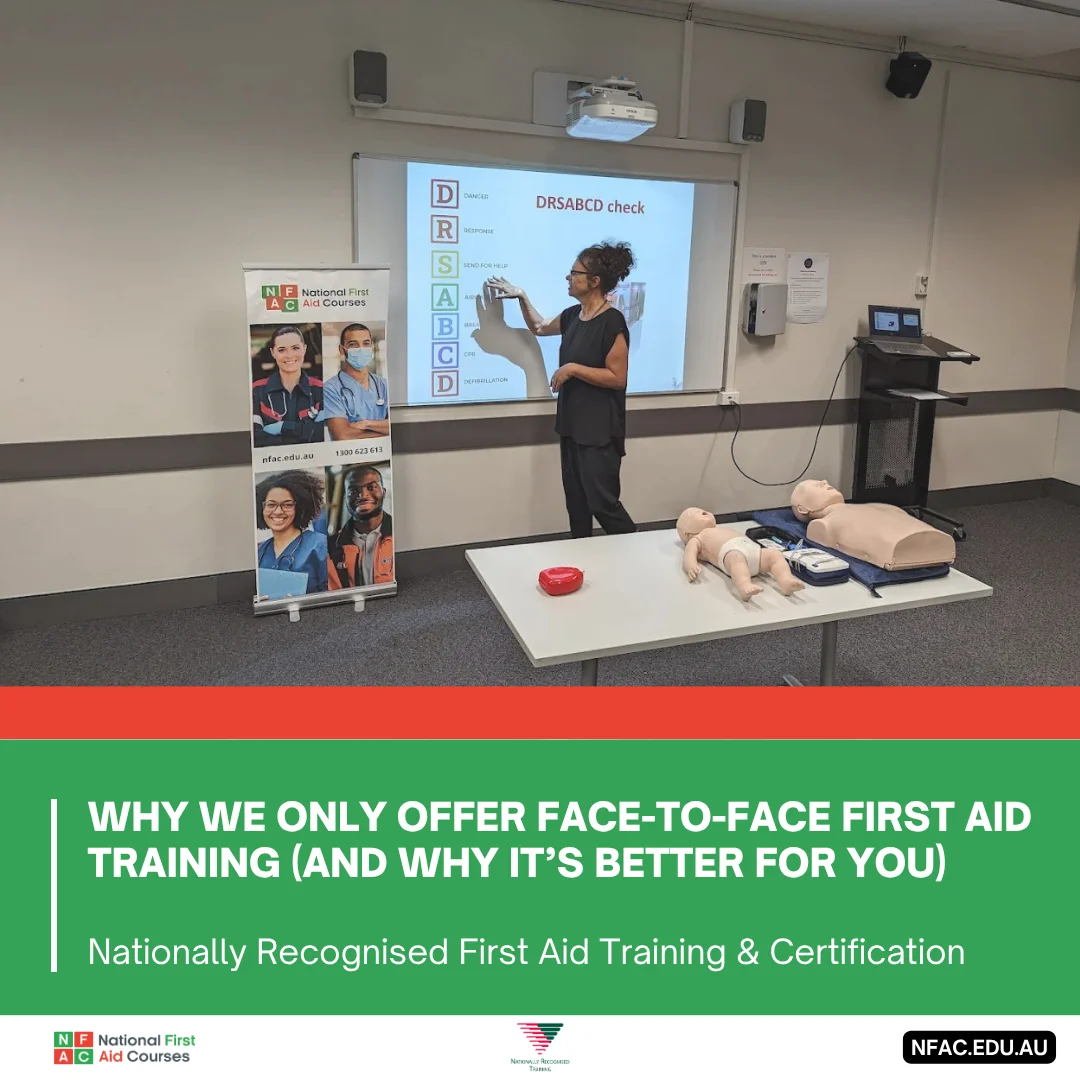
A smooth on-site session calls for a couple of practical points from the host. Below is a quick checklist to make the day efficient.
A room or protected area big enough for functional terminals, accessibility to power, and clean surfaces for mannequins. A list of attendees with roles and change times, so the trainer can series learning and include late-shift plans. Copies of current incident reports or danger registers to customise scenarios. An area map for rescue access and guidelines for where substitute casualties must be positioned throughout drills. PPE and a number of handwear covers and glasses if the workplace makes use of particular protective tools the responder would usually wear.This short list keeps the session functional and minimises disturbances. If your website does not have a clean area, an occasion gazebo or a cleared office will work; the major need is risk-free area for stooping and doing CPR.
Certification, revivals and lawful expectations
An HLTAID011 Declaration of Accomplishment in the Nationally Acknowledged Training structure typically lasts three years for first aid proficiencies, with CPR refreshers frequently needed every year. Employers must ask the trainer which units are analyzed and which are demonstration-only. For lawful compliance, a clear record of participants, analysis outcomes, and released certificates belongs in the human resources or security declaring system.
A typical error is assuming a single training day forever solves a staffing trouble. Skills degeneration is genuine; substitute compressions without responses will deteriorate over months. Many work environments implement a brief quarterly practical drill lasting 20 to thirty minutes. A CPR practice on a mannequin with automated responses every three months considerably improves retention compared with annual training alone.
Costs and trade-offs
On-site training has clear advantages yet additionally trade-offs. Regular pricing reflects travel time, fitness instructor prep work, tools supplied and the class size. For tiny teams, the per-head price is more than sending individuals to group courses at a main location. For medium to huge groups, on-site ends up being more cost-effective and decreases lost performance. If your office has multiple shifts, compare 2 alternatives: run an on-site course extending those shifts, or pay for multiple off-site courses and staff travel.
Another trade-off involves deepness versus comfort. A pressed two to three hour recognition session can get every person acquainted with basic CPR and AED use, which is exceptional for huge event volunteer pools. However it will certainly not satisfy accreditation demands where an officially trained first aider is called for by guideline or insurance coverage. Balance benefit and compliance: make use of understanding sessions for wide insurance coverage and certified courses for nominated responders.
Equipment and AEDs
Automated external defibrillators are progressively common at work environments and occasion websites in Jandakot. Practical training must include AED make use of on mannequins so team ended up being comfortable with pad placement and following voice triggers under anxiety. Choose about AED purchase based upon expected feedback times from regional ambulance solutions, event thickness, and the price of an AED about risk.
Beyond an AED, a well-stocked workplace kit exceeds bandages. Think about including tourniquets, haemostatic dressings, splints, coverings, and an oxygen cylinder if personnel are educated to utilize it. Train -responders to examine set expiry days monthly, and to rotate consumables into site first aid materials to stay clear of waste. A sensible habit I recommend is a straightforward stamp inside the set with the next audit day; it comes to be a visual sign for maintenance.
Examples from Jandakot events
At a weekend motorsport event near Jandakot, organisers dealt with 3 concurrent threats: heavy machinery, fuel handling, and big viewer crowds. The on-site course included a customized component on chemical burns and breathing injury, utilizing the actual area of the marshal messages to show casualty extraction and radio handover expressions that the occasion sent out to protection and stewards. After training, the event designated two roving very first aiders that lugged https://jsbin.com/bamipokiga compact haemorrhage control kits along with the main first aid tent.
For a smaller sized company launch hosted in Jandakot, a one-day certified first aid and CPR course pleased both the insurer and the business's risk register. The instructor spent thirty minutes mapping workplace departures and parking area access; that tiny investment repaid when the post-course exercise identified that a gateway would require to be unlocked to speed rescue access.
How to choose a trainer in Jandakot
Choose a carrier that can demonstrate current accredited shipment and that will certainly reveal a sample lesson strategy. Request recommendations from comparable workplaces or events and check that the fitness instructor keeps money in their own first aid abilities. Practical credentials to verify consist of an existing training assessor credentials and up-to-date enrollment with a training organisation. A trainer with neighborhood experience will certainly know with the local ambulance terminal and normal ambulance reaction times for Jandakot, which can educate decisions about AED positioning and responder numbers.
A brief negotiation question worth asking is whether the carrier will certainly deliver a basic package or will consist of a free pre-course site walk-through. The latter indicates a consultative technique and improves course relevance.
Refresher training and keeping competence
After the initial course, develop straightforward systems to keep abilities alive. A quarterly 20-minute sensible session works and inexpensive. Make use of a mannequin with comments or run a 15-minute blind circumstance where one employee calls 000 and an additional leads compressions; after that debrief. Maintain documents of these drills as evidence of active risk administration for insurers.
Plan official re-certification in advance of expiry. An excellent method is to arrange annual CPR refreshers and change the HLTAID011 every 24 to 36 months relying on organisational policy. Preserving a schedule alert with at least 3 months' notice protects against lapses.
Final factors to consider for occasion organisers
Events have unique dynamics. Volunteers rotate, crowd behaviour changes through the day, and environmental factors such as warm can produce collections of incidents. For events, take into consideration a blended design: a brief recognized pack for the main camping tent team and deeper certified training for roaming first aiders and clinical leads. If the occasion utilizes paid medical teams, guarantee local team still obtain fundamental CPR and haemorrhage control training so they can act prior to specialists arrive.
A final pragmatic information: connect who the first aiders are clearly to participants. Easy signs, a pinned map at each entrance point, and a public address announcement at the start can decrease confusion. When personnel understand who is educated, the very first reaction is quicker and less chaotic.
If you need a tailored quote for on-site first aid training in Jandakot, prepare the number of attendees, the sort of workplace or occasion, and a short case history for the last 12 months. A short discussion with a trusted provider will certainly create a clear strategy that fulfills legal needs and functional needs, and that leaves groups better prepared when mins matter.